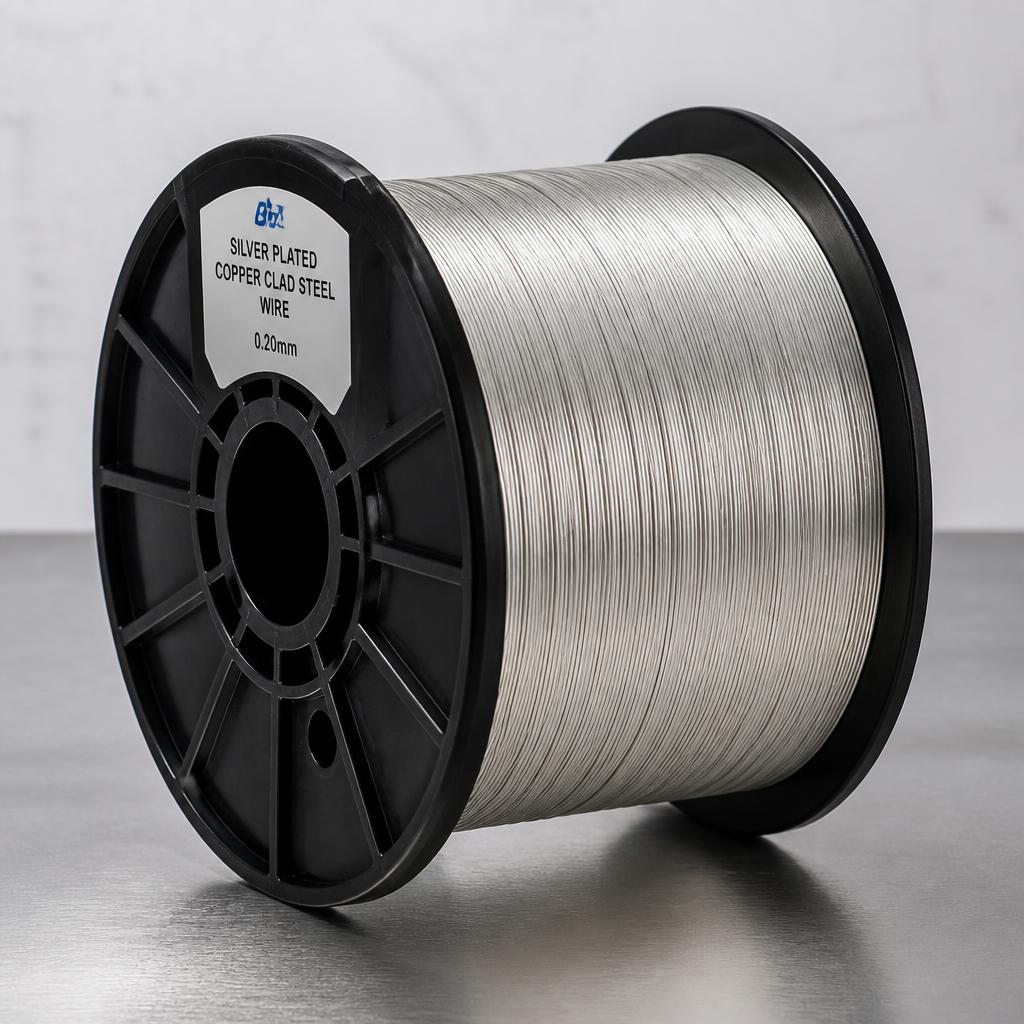
Coated Conductors
Tin · Silver · Nickel · Enameled · Multi-layer plating
Why This Conductor
Plating that doesn't flake off at the crimp.
Computer-controlled bath chemistry. Current density dialed in per wire diameter. Every batch gets thermal shock at 150°C then a bend-strip test. If a single flake lifts, the whole lot gets stripped and re-run. You'll never find a thin spot on a CladCore plated conductor.
Tin. Silver. Nickel. Enamel. Mix and match.
Hot-dip tin for general corrosion — cheap, effective, good to 150°C. Electroplated silver for VHF/UHF where skin depth is measured in microns. Electroless nickel for 260°C continuous, no current crowding at the edges. Polyester-imide enamel for fractional-horsepower motor windings.
ASTM B227. B229. B355. IEC 60317. All of them.
Coating adhesion testing isn't optional here. Every coated reel leaves with a test report. Thermal shock, bend-strip, solderability (J-STD-002), and salt spray (ISO 9227 NSS) if the PO called for it. We don't cherry-pick samples — every reel gets its own cert.
Technical Data
| Parameter | Value |
|---|---|
| Base conductor | CCS (21–55% IACS) or pure copper |
| Coating types | Tin, Silver, Nickel, Enameled, Dual-layer |
| Diameter range | 0.05 – 3.00 mm |
| Coating thickness | 1 – 15 μm (application-engineered) |
| Temperature range | -65°C to +260°C (coating-dependent) |
| Standards | ASTM B227, B229, B355, IEC 60317, J-STD-002 |
Frequently Asked Questions
What coating thicknesses are available on plated CCS wire?
Coating thickness runs 1–15 µm, engineered per application: 3 µm tin for harness terminations, silver for VHF/UHF skin-depth service, and nickel up to 260°C continuous. Dual-layer builds such as tin-over-nickel are standard production, not specials.
Will the plating flake at the crimp or during reflow?
No — every batch is thermal-shock tested at 150°C followed by bend-strip adhesion testing, and solderability is verified to J-STD-002. If a single flake lifts in QA, the whole lot is stripped and re-run before it ships.
What temperature range can coated conductors survive?
Coated conductors are rated from -65°C to +260°C depending on coating: hot-dip tin to 150°C, electroplated silver for RF service, and electroless nickel for 260°C continuous under-hood environments.
Can you plate over pure copper as well as CCS?
Yes — you spec the base conductor, CCS (21–55% IACS) or pure copper, and we plate it. All coated reels ship with thermal shock, bend-strip and salt spray (ISO 9227 NSS) reports when the PO calls for them.
Related Applications & Resources
Custom specification?
We regularly produce bespoke IACS grades, custom coatings and non-standard diameters. Tell us your application — talk to an engineer.